Bookings and orders take too many messages
Customers wait for a reply to check availability, place an order or change a booking. Your team handles each step manually.
iOS and Android development
We build iOS and Android apps for bookings, purchases and customer service, plus field tools for your team. Make it easier to order, complete a job and share updates wherever work happens.
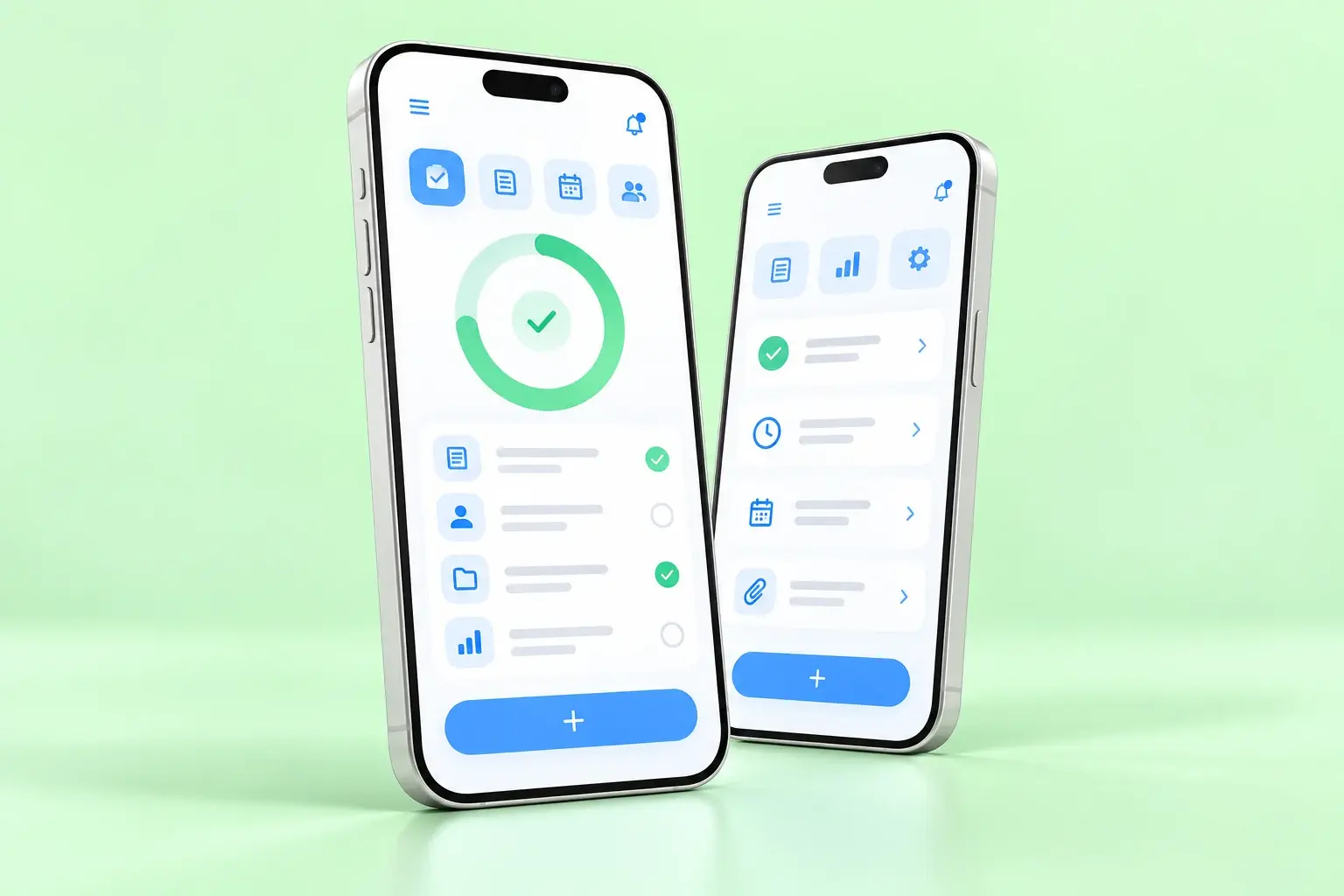
Focused app
from €12k
Typical first release
8–18 weeks
Platforms
iOS + Android
01
Identify repetitive tasks, missing information, and steps where work stalls. We use those needs to build a solution for your team.
Customers wait for a reply to check availability, place an order or change a booking. Your team handles each step manually.
Photos, job details and signatures arrive through separate messages. Office staff spend time collecting and entering them again.
Your service has no convenient place for repeat purchases, loyalty benefits or relevant updates that customers choose to receive.
02
We build availability, reservations, ordering and payments into one mobile journey, making it easier for customers to complete the next step.
Work orders, photos, signatures and offline records let employees complete tasks on site and share them with the office when connected.
Accounts, loyalty benefits, subscriptions and optional notifications keep your service accessible between visits.
Your team gets an administration area for users, orders, content and reports. We connect existing systems and prepare the app for store release.
03
04
Each stage ends with a concrete decision, keeping scope, cost, and responsibility visible.
01
Confirm why an app is better than responsive web and identify the first repeatable user outcome.
02
Compare performance, device access, team, platform behavior, timeline, and long-term maintenance.
03
Prototype the experience, connect the backend, and test on a defined real-device matrix.
04
Use internal and beta tracks before store production, then monitor stability and product signals.
05
These are starting prices for the scope described. Your quote reflects the workflows, features, and integrations your business needs.
from €3,000
Typical timeline: 2–4 weeks
Clickable or technical prototype for the core mobile workflow.
from €12,000
Typical timeline: 8–16 weeks
Core workflow, accounts, backend connection, notifications, and store preparation.
from €35,000
Typical timeline: 4–8+ months
Payments, several roles, complex backend, offline behavior, hardware, or system integrations.
06
A focused cross-platform first release commonly starts around €12,000. Products with payments, complex backend workflows, offline data, hardware, or several roles often start around €35,000.
A focused first release usually takes 8–16 weeks. Larger products are safer to split into staged releases across four to eight months or more.
Cross-platform is often efficient when iOS and Android share most product behavior. Native is stronger when platform-specific interaction, hardware access, performance, or independent platform roadmaps dominate.
The client should own both developer accounts. The delivery team can receive the access needed to prepare and submit releases without controlling the business accounts.
Yes. Mobile scope can include authentication, APIs, database, notifications, administration, analytics events, and integrations needed by the app.
A clear next step
We will suggest what we can simplify, how the solution would work, and the scope and budget for a useful first release.
Send an inquiry